Learn a little by doing a little
Make an idea click.
Move beyond an answer. Explore visual reasoning puzzles and interactive challenges across all 6 subjects, with instant rule-based verification and step-by-step explanations.
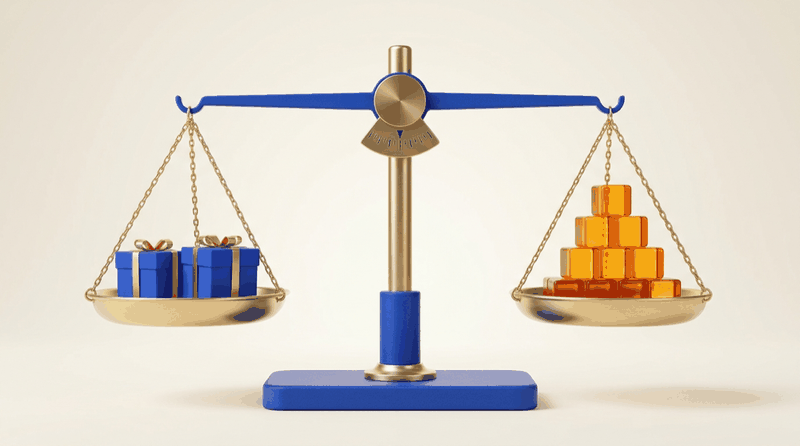
What belongs in each mystery box?
Every mystery box holds the same value. Make the two sides balance.
0 of 7 challenge types explored at this stage
Keep the discovery going.
Turn a little understanding into a fresh page of practice.
Streaks count different challenges solved consecutively in this session and reset after an incorrect check. Repeating a solved question adds no points. Original rule-based practice. Age bands are guidance, not an assessment or curriculum certification.
Practise by subject and stage.
A solution contains 9 mol of solute dissolved in a total volume of 6 dm³. Calculate the molar concentration in mol/dm³.
Use c = n ÷ V to calculate the molar concentration of a solution in mol/dm³.
0 of 4 solved in this round
Featured, challenges & worksheets in Science
Uniform acceleration (s = ut + ½at²)
Use the uniform acceleration equation s = ut + ½at² to calculate displacement from initial velocity, acceleration and time.
Refraction & refractive index of light
Use refractive index n = λ₀ ÷ λ to calculate the reduced wavelength of monochromatic light inside an optical medium.
Alpha (α) & beta (β) nuclear decay
Balance nucleon (mass) number A and proton (atomic) number Z across alpha (α) and beta-minus (β⁻) radioactive decay equations.